

Support
Support the Transformation by Participating in Building a Greener Future for Our Planet
CNPJ 08.547.138.0001-61
Support the Transformation by Participating in Building a
Greener Future for our Planet!
COMMITTED TO THE MAINTENANCE OF NATURE
ESSENTIAL FOR THE SUSTAINABLE DEVELOPMENT OF BRAZIL
WE BELIEVE THAT THE DEFENSE OF THE ENVIRONMENT IS AN
ESSENTIAL COLLECTIVE RESPONSIBILITY TO GUARANTEE THE QUALITY OF LIFE
FOR PRESENT AND FUTURE GENERATIONS.
Send an email with your suggestions.
Email suggestions@illea.org.br
For any questions or information, or
Call or WhatsApp +55 51 99333-1336
Latin American Institute of Environmental Studies - ILLEA
The Latin American Institute of Environmental Studies ILLEA acts responsibly and committedly to maintaining nature as an essential basis for the sustainable development of Brazil, recognizing that economic and social progress is only possible when it is in balance with environmental preservation.
The president of the Institute, of the Latin American Institute of Environmental Studies - ILLEA located in Rst. 287 km 80 Linha Bem Feita Venâncio Aires, Rio Grande do Sul - Brazil, hereby requests support from the entire Brazilian and international community, as well as from public and private political organizations and sectors, through the pursuit of sustainable development. INSTITUTO ILLEA is a non-profit organization dedicated exclusively to supporting actions in Brazil focused on the environment, environmental and cultural studies, environmental preservation, and nature conservation, as well as national, regional, and community sustainable development in all Brazilian states.
ILLEAs Projects
ILLEAs projects will solve problems of relevance and urgency for society, with resources being used responsibly and effectively. I emphasize that the impact of our actions will be positive and significant at the national level, providing benefits to Brazilian communities. Given the institutes need to invest in green areas, increasing tree cover and national green spaces to improve the oxygen supply to our planet, and considering climate change and increased global warming, the Institute aims to offer a new vision with new changes and will invest all its resources in improving degraded or degraded areas, providing new expectations and new benefits for future generations in relation to nature in Brazil.
Declaring its commitment as an Institute to use all its funds and resources for the purposes presented here, such as seedlings of all species, all species of plants and trees to be replanted, we are certain that any and all help for our Institute will be trustworthy in assisting the population in Brazil in green areas and natural resources.
With our funds, the Institute will work on environmental education actions of all kinds, planting trees and flowers of all types and all types of plants and medicinal herbs to improve peoples health, reforestation in areas that are currently degraded and formerly had green areas, and the publication and editing of books on healing plants. Thus, working with the natural medicine of nature.
Our main objectives for society are to provide new investments and restructure the environment so that it is possible for future generations to have a better quality of life, providing a balanced and preserved ecosystem. Contributing to the transformation and improvement of everyone on our planet today, as well as to schools and community integration and development centers, and the public environments in which we live.
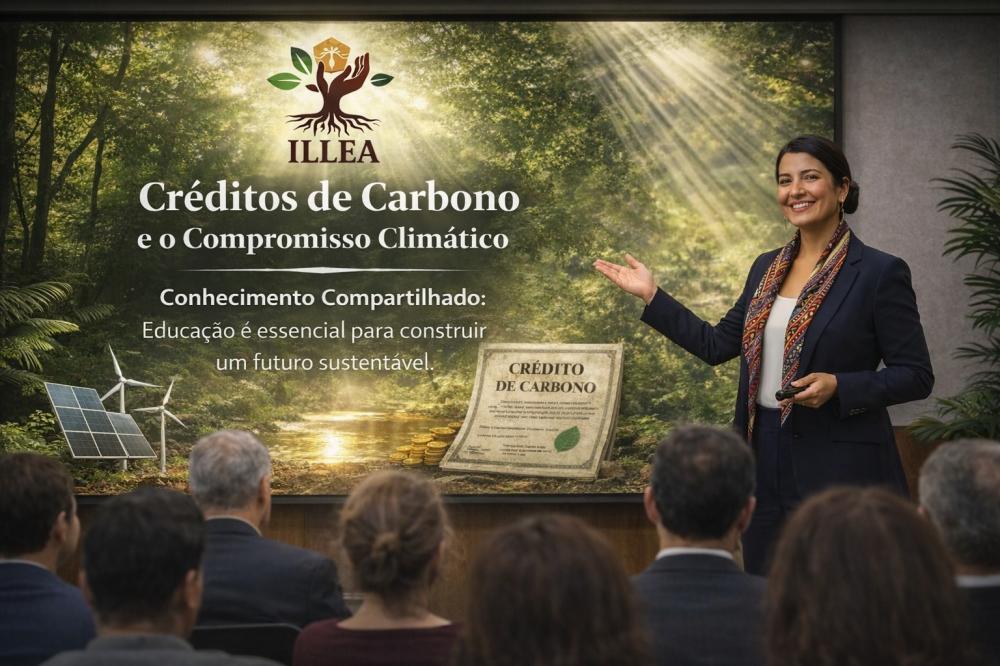
Neutralizing carbon is more than offsetting emissions. Its investing in the future of humanity.
The Brazil Carbon Neutral 2026 Project invites governments, companies, and investors from around the world to become strategic partners in one of the largest climate initiatives in Latin America.
GLOBAL CLIMATE SOLUTION FOR THE ILLEA INSTITUTE
Brazil is one of the most strategic countries for the global climate solution; a potential protagonist in the world carbon market, the world seeks reliable, traceable, and ethical projects. Implementing a national carbon neutrality program by 2026, with international recognition, promoting:
reduction and offsetting of CO2 emissions; large-scale environmental restoration; strengthening of local communities; attraction of global climate investments.
Restoring degraded areas in Brazilian biomes.
Implementing renewable energy and energy efficiency projects.
Structuring environmental assets for high-integrity carbon credits.
Creating a Carbon Neutral Brazil seal – ILLEA
Empowering communities, youth, and environmental technicians
Green jobs - Capacity building for traditional and rural communities - Climate education - Local green economy - Brazilian green innovation
By neutralizing carbon, the OSCIP (Civil Society Organization of Public Interest) measures, reduces, and offsets greenhouse gas emissions generated by its activities, projects, events, and impact chains, actively contributing to mitigating the global climate crisis. Leading carbon neutrality initiatives, OSCIPs consolidate themselves as essential agents of climate action, connecting governments, businesses, communities, and investors around real solutions to address climate change.
LATIN AMERICAN INSTITUTE OF ENVIRONMENTAL STUDIES
By supporting the Institute in Brazil, you contribute to:
the protection of nature and biodiversity;
sustainable development with social responsibility;
the production of knowledge and environmental solutions;
environmental education and awareness;
transparency and good socio-environmental governance.
Investing in the future of humanity means recognizing that economic, social, and environmental development must go hand in hand. For a non-profit organization focused on environmental studies, this investment translates into concrete actions aimed at protecting the environment, promoting sustainability, and building a more balanced planet for future generations.
The preservation of natural resources, addressing climate change, and promoting a conscious environmental culture are urgent challenges of our time. By working in research, environmental education, ecosystem restoration, and sustainable development, the non-profit organization directly contributes to improving the quality of life for society and to the environmental security of the future.
Ensuring the Right to Life
Ensuring the right to life requires environmental justice. Vulnerable communities are the most affected by environmental degradation and climate change. The OSCIPs work seeks to reduce socio-environmental inequalities, promoting inclusion, protection of territories, and equitable access to a healthy environment.
Each contribution is applied ethically, transparently, and with accountability, ensuring that resources are transformed into concrete actions and measurable results. Donate. Be a partner. Support this institutional cause. Together, we can transform the future with a commitment to action and care for the environment—a legacy for the future.
The Latin American Institute of Environmental Studies - Illea is focused on improving peoples living conditions, focusing on the environment, nature, and Brazilian natural resources and biomes. It combats hunger and poverty. Social projects are being implemented in Brazil at the national level.
We declare that our impact will be very positive and has been highly anticipated in recent years through actions for the preservation of the environment, health, education, culture, and social assistance, promoting ethics, citizenship, and human rights for full and effective democracy and other universal values, articulating with the Public and Private sectors and Civil Society proposals for actions of collective interest and in accordance with the purposes of this Institute.
SUSTAINABILITY OF RESOURCES AND THE ENVIRONMENT
Working for the continuous sustainable development of natural resources for the entire Brazilian population, as well as for families in Brazil, children, adolescents, schools, universities, and underprivileged communities in Brazil, aiming at the preservation and recovery of Nature.
Our initiatives are guided by scientific principles, respect for traditional knowledge, and the integration of knowledge, culture, and social participation. We work to develop sustainable solutions that encourage environmental preservation, the recovery of degraded areas, and the adoption of practices that reconcile socioeconomic development and nature conservation.
Committed to ethics, transparency, and the public interest, the Environmental Studies OSCIP promotes environmental education, strengthens institutional partnerships, and supports public policies aimed at the sustainable management of natural resources, contributing to the construction of an environmentally just, resilient, and sustainable future.
Our projects will solve relevant and urgent problems for society, with resources being used responsibly and effectively in actions that will be positive and significant nationally and internationally.
Providing benefits for Brazil and the world, the institute needs to invest in green areas, increasing tree cover and green spaces to improve the planets oxygen and climate. Given the current climate changes and global warming, the institute offers a new vision for change and invests all its efforts in improving degraded or degraded areas, providing new expectations and benefits for future generations in relation to nature and the world.
INSTITUTIONAL COMMITMENT DECLARATION
The Latin American Institute for Environmental Studies – ILLEA, a Public Interest Civil Society Organization (OSCIP), reaffirms through this Declaration its permanent commitment to the protection of the environment, the promotion of sustainable development, and the unconditional defense of the right to life, guiding all its actions by public interest, ethics, transparency, and socio-environmental responsibility.
ILLEA recognizes that the preservation of natural resources and the balance of ecosystems are essential conditions for human existence, collective health, social justice, and the continuity of life on the planet. Thus, it understands that caring for the environment is not merely an institutional choice, but an ethical and civilizational duty.
The organization is committed to contributing to the mitigation of environmental impacts, climate adaptation, and carbon neutrality, supporting nature-based solutions, the energy transition, and sustainable practices that strengthen environmental and territorial resilience.
The NGO Institute for Environmental Studies publicly and permanently declares its commitment to protecting the environment, promoting sustainable development, and defending the collective interest, acting ethically, transparently, and responsibly.
We are committed to developing socio-environmental studies, research, projects, and actions that contribute to the conservation of natural resources, the mitigation of environmental impacts, and addressing climate change, always aligned with best scientific practices and current legal frameworks. We reaffirm our commitment to environmental education, understanding it as a fundamental instrument for social transformation, civic education, and the construction of a culture of respect for nature and life.
With our funds, the Institute will work on environmental education initiatives of all kinds, planting trees and flowers of all types, including medicinal plants and herbs, to improve peoples health; reforestation in areas that are currently degraded but previously had green spaces; and the publication and editing of books on healing plants. Thus, we will work with natural medicine.
OUR MAIN OBJECTIVES FOR DONATIONS TO THE ILLEA INSTITUTE
The Environmental Studies NGO invests directly in building a fairer, healthier, and more sustainable future for current and future generations. By strengthening this work, society contributes to strategic objectives with high collective impact, such as:
• Preservation of the environment and natural resources
Promoting the protection of biodiversity, the conservation of forests, water, and soil, and the responsible use of natural resources, ensuring ecological balance and quality of life.
• Production of scientific and technical knowledge
Supporting environmental research, studies, and diagnoses that guide public policies, sustainable projects, and responsible, evidence-based decisions.
• Environmental education and social awareness
Stimulating the formation of conscious citizens through educational actions, lectures, campaigns, and community projects that strengthen the culture of sustainability.
• Preservation of memory and cultural heritage
Protecting knowledge, traditions, artistic expressions, and tangible and intangible cultural manifestations. • Democratization of access to culture
Expanding public access to cultural goods, services, and content, promoting equity and inclusion.
• Cultural production and dissemination
Enabling the creation, publication, and circulation of cultural, educational, and artistic works, such as books, exhibitions, events, workshops, and training materials.
• Education and Cultural Development
To stimulate cultural education as an instrument of citizenship, critical awareness, and social transformation.
• Valuing Traditional and Popular Knowledge
To recognize and strengthen ancestral knowledge, community practices, and local cultures.
• Social and Economic Development
To generate opportunities, strengthen the creative economy, and promote sustainable development through culture.
• Addressing Climate Change
To develop climate mitigation and adaptation initiatives, promoting nature-based solutions and actions that reduce environmental and social impacts.
• Promoting the Health and Well-being of Communities
To encourage sustainable practices that positively impact public health, such as the rational use of natural resources, green areas, and ecological alternatives.
• Social Inclusion and Sustainable Local Development
To generate opportunities, strengthen communities, support the green economy, and stimulate projects that integrate the environment, income, and social dignity.
• Transparency, Governance, and Socio-environmental Responsibility
To ensure that public and private resources are applied ethically, efficiently, and with accountability, strengthening public trust. • Alignment with the Sustainable Development Goals (SDGs)
Contributing directly to the UNs global goals, reinforcing the commitment to sustainability, social justice, and the protection of the planet.
Supporting an Environmental Studies NGO means transforming concern into concrete action. It means actively participating in environmental protection, building effective public policies, and strengthening a positive legacy for Brazil.
It means providing new investments and restructuring the environment so that a better quality of life is possible for future generations, providing a balanced and preserved ecosystem.
Thus contributing to the transformation and improvement of everyone on our planet, as well as for schools and community integration and development centers, and the public environments in which we live.
Also, with actions in the eradication of child and slave labor, promoting research, defense, and maintenance of family farming. Actions to combat hunger and poverty, promoting environmental studies and projects for the treatment of industrial, chemical, biological and organic waste.